All you need to know about underfloor heating (UFH)
Underfloor heating is a fantastic extra in your new Redrow home. Even better, our Eco Electric homes fitted with an Air Source Heat Pump have underfloor heating as standard downstairs.
There are lots of advantages to underfloor heating – it offers a luxe feeling of cosy comfort, is energy efficient, and it allows you to arrange, furnish and enjoy your living space how you want without worrying about blocking out any heat. Here’s what you need to know about the underfloor heating system in your new home.
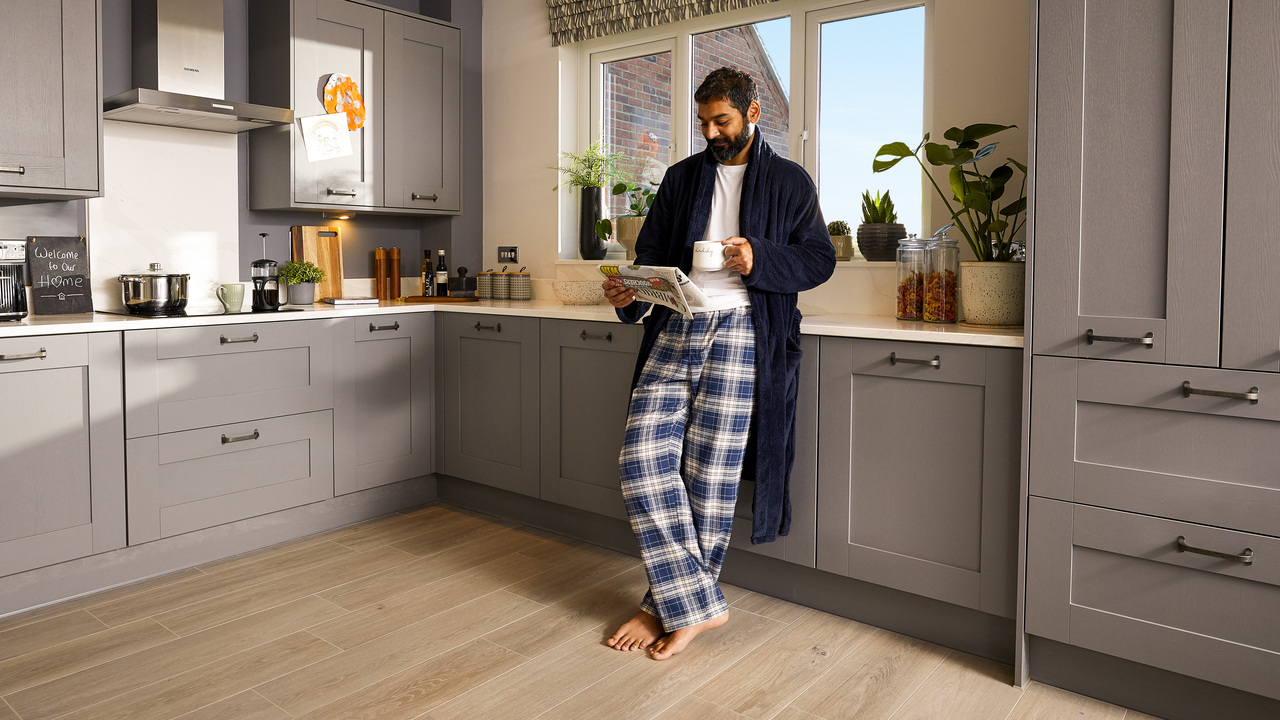
How is underfloor heating different from a standard heating system?
It’s important to remember that a radiator and an underfloor heating system work in different ways and are therefore controlled differently.
Radiators have a fast reaction time and are generally controlled via one programmable room thermostat and thermostatic radiator valves in each room.
In comparison, underfloor heating has a slower response time and is managed via several programmable thermostats, one in each room. The good thing about underfloor heating, compared to radiators, is that an underfloor heating retains heat for longer and maintains a comfortable ambient temperature throughout your home.
You must set your thermostats to the required comfort temperatures (18-21 C) and set a setback temperature overnight. Using the night setback function allows the underfloor heating to cool and maintain a lower temperature of around 16 C overnight, and then heat up efficiently in the morning. All you need to do is set the thermostat and leave it to do all the hard work!
How does underfloor heating work?
Underfloor heating works by circulating water heated to the desired temperature through separate circuits, controlled by individual flow meters. These meters allow thermoelectric actuators to control the temperature and time settings in each room.
In your new Redrow home, you will have a manifold (central hub) which should always be accessible for periodic inspection.
The below diagram shows this in more detail:
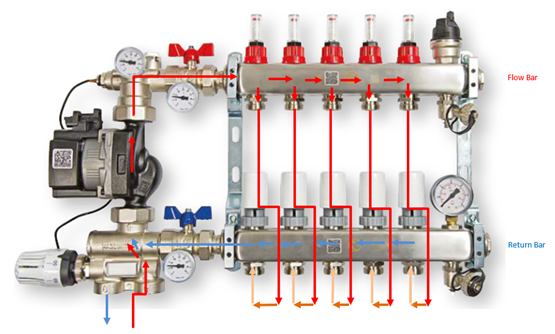
In the diagram, red indicates the flow of water into the pump pack, pushed to the flow bar on the manifold via the Grundfos pump. Then the water travels through the underfloor heating pipework and back into the return bar before re-circulating and mixing with the hot/cold from the primary side.
Does underfloor heating work with any type of flooring?
It’s really important to check compatible flooring types before changing anything in your home fitted with underfloor heating, to make sure that you don’t block out or restrict heat.
Did you know that ceramic tiles and luxury vinyl tiles (LVT) are conductors of heat, whereas carpets are insulating? In rooms with underfloor heating, tiles will heat up the room faster; carpets will take longer but will help retain the heat for longer.
If you choose a carpet, there are some things you need to bear in mind:
- The maximum tog of a carpet for areas with underfloor heating is 2.5; this includes underlay.
- If you have chosen a Redrow carpet, then our maximum togs are 1.5 so with underlay it does not exceed 2.5 tog value.
For more information on underfloor heating, please refer to the guides you received when you moved in. Alternatively let our Homeowner Support team know of any issues.