
Where we live has a huge impact on our wellbeing, sense of belonging and day-to-day happiness.
A recent study found that social characteristics, such as feeling connected to your local community, and regularly interacting with your neighbours, can reduce feelings of loneliness.
We carefully choose the locations of our homes so that everything you need is close by: schools, stores, transport links, walking paths and places to run, play and relax. Thoughtfully designed spaces like these encourage neighbours to connect, communities to flourish and friendships to form naturally.
In this guide, we explore what makes the perfect neighbour, along with practical ways to be the kind of neighbour everyone appreciates.
The qualities neighbours really value
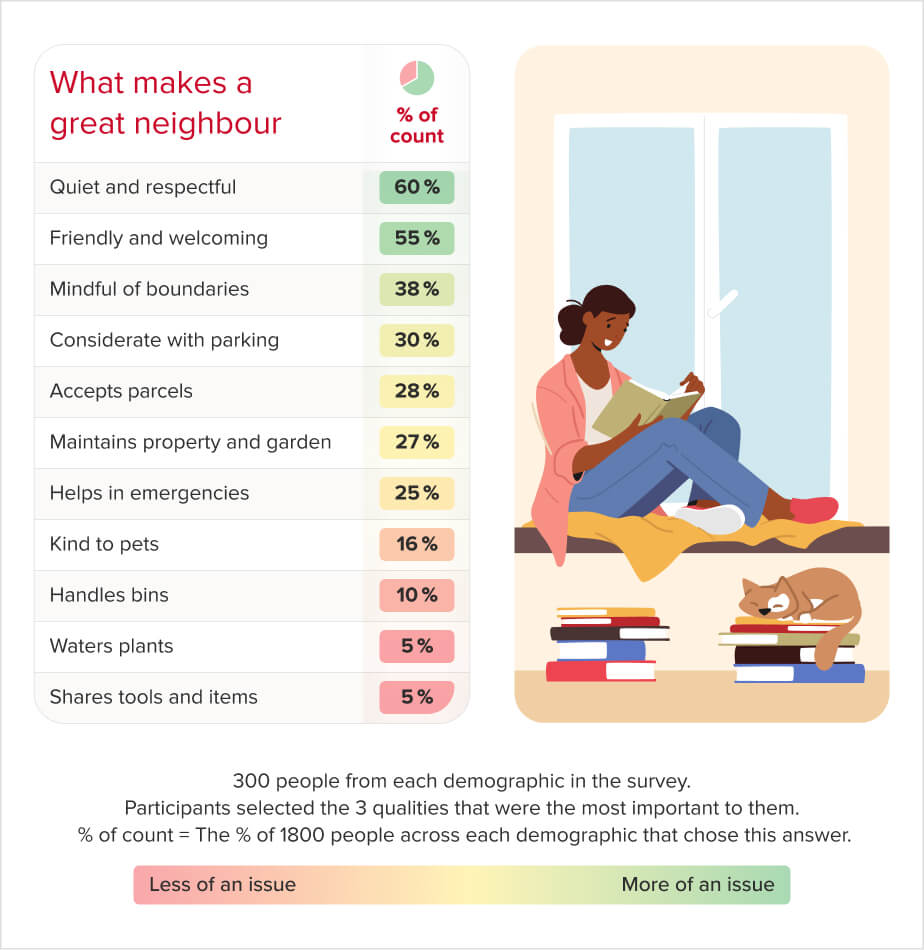
We surveyed 1,800 homeowners across the UK to reveal the traits people value most in their neighbours.

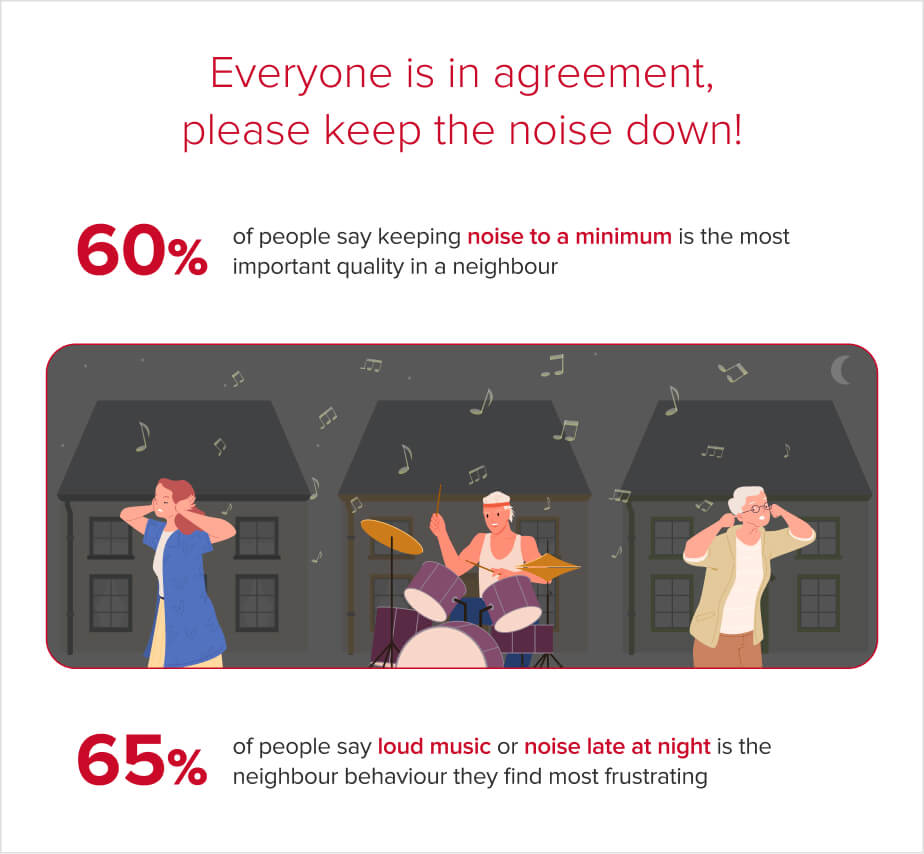
Keeping noise to a minimum emerged as the top quality, as highlighted by 60% of respondents. Appreciation for a quiet neighbour rises with age, peaking at 71% among those aged 55-64, who prize peace and quiet above all.
Other highly valued traits include:
- Being friendly and greeting neighbours (55%)
- Respecting personal boundaries (38%)
- Parking considerately (30%)
- Accepting parcels (28%)
Small gestures such as maintaining their garden (27%), helping in emergencies (25%), being friendly towards pets (16%) and taking out the bins on time (10%) are also valued traits.
These behaviours foster trust and mutual respect, helping to build strong, long-lasting connections.
Behaviours that can frustrate neighbours
While there are qualities that everyone loves in a neighbor, certain behaviours can also cause tensions to rise.
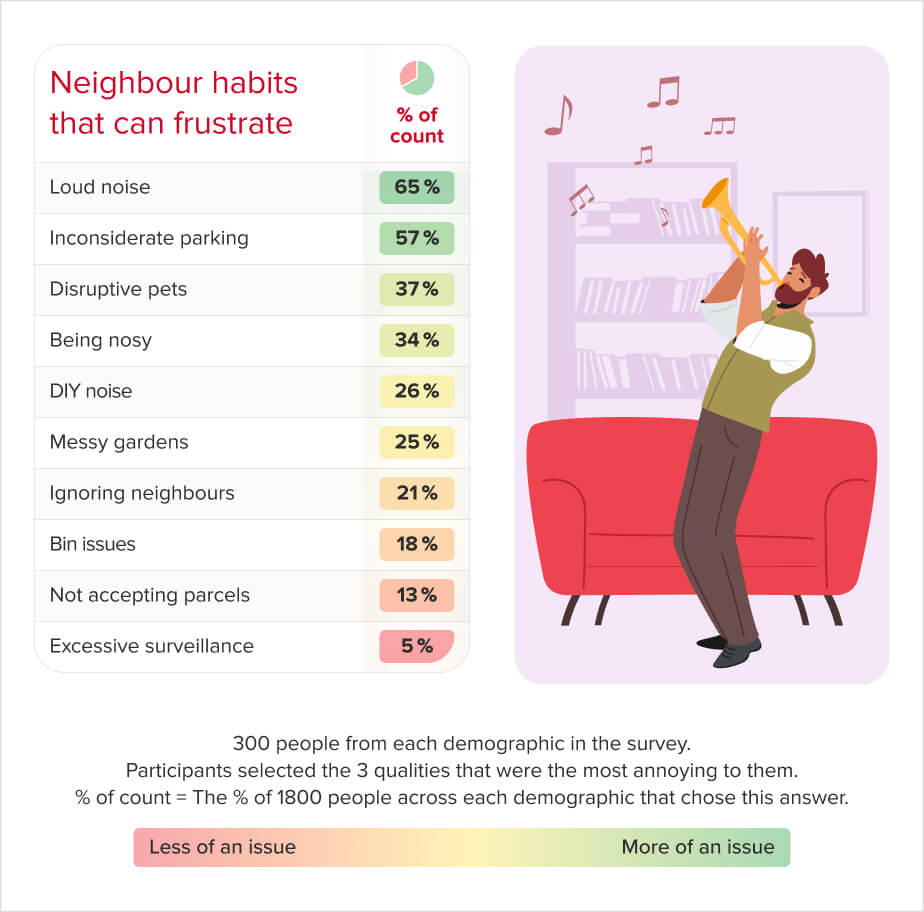
Almost two-thirds (65%) of respondents cited loud music and noise late at night as their biggest annoyance.
Other common irritations include:
- Inconsiderate parking (57%)
- Pets causing disruption (37%)
- Being overly nosy (34%)
- DIY noise at inappropriate times (26%)
Messy gardens (25%), ignoring neighbours (21%), bin-related issues (18%) and not taking in parcels (13%) were also sources of frustration.
Being aware of these behaviours, and addressing them when needed, can help to create a safer, calmer and more respectful community for everyone.
How to be a neighbour everyone appreciates
Being a great neighbour isn’t just about being friendly. It’s also about the practical actions that make life easier and more enjoyable for those around you.
Our experts have put together five actionable tips, inspired by the behaviours that neighbours really value:
1. Look out for your neighbours when they’re away
Take in bins, water plants or keep an eye on the house while someone is on holiday. Small acts like these show thoughtfulness and build trust.
2. Offer practical help
Help a neighbour with odd jobs, mow their lawn while doing your own or lend a hand with DIY projects. These gestures make daily life smoother and strengthen bonds.
3. Support the community
Shop locally, volunteer or take part in neighbourhood events. Even small contributions like donating items to a food bank, picking up litter or fundraising for local causes make a big difference.
4. Be considerate and reliable
Keep pets under control, avoid late-night noise and warn neighbours if you’re planning something noisy. Being predictable and respectful helps maintain harmony on the street.
5. Share resources and knowledge
Offer to walk a neighbour’s dog, give lifts when needed or share tips about local businesses, transport and amenities. Passing on useful information can make life easier and more connected for everyone.
Incorporating these practices into your daily life can help to build strong bonds, especially if you’re new to an area.
How Redrow builds community spirit
Being a considerate neighbour is one part of a thriving neighbourhood, but good design matters too.
At Redrow, creating a sense of community is at the heart of every development. Our aim is to design neighbourhoods where residents can connect, thrive and enjoy everyday life together.
Practical design is paired with thoughtful planning to encourage activity and connection. Streets, green spaces and walking routes are all carefully laid out to make it easy for neighbours to meet and spend time outdoors together.
Our playmaking campaign takes this a step further, putting play at the centre of community life. Safe, engaging spaces help children to build confidence, encourage parents to connect and support friendships that grow alongside the neighbourhood.
By combining beautifully designed homes with lively, accessible shared spaces, we create communities where people feel like part of something bigger.
Green spaces and social media groups help to create a sense of community
People feel most connected when they can make use of shared spaces and take part in shared activities. In fact, studies show that neighbourhood social connectedness can improve physical health, happiness and overall life satisfaction.
Our survey found that local parks and neighbourhood social media groups are the two most important factors for community feeling, according to almost two-fifths (39%) of respondents.
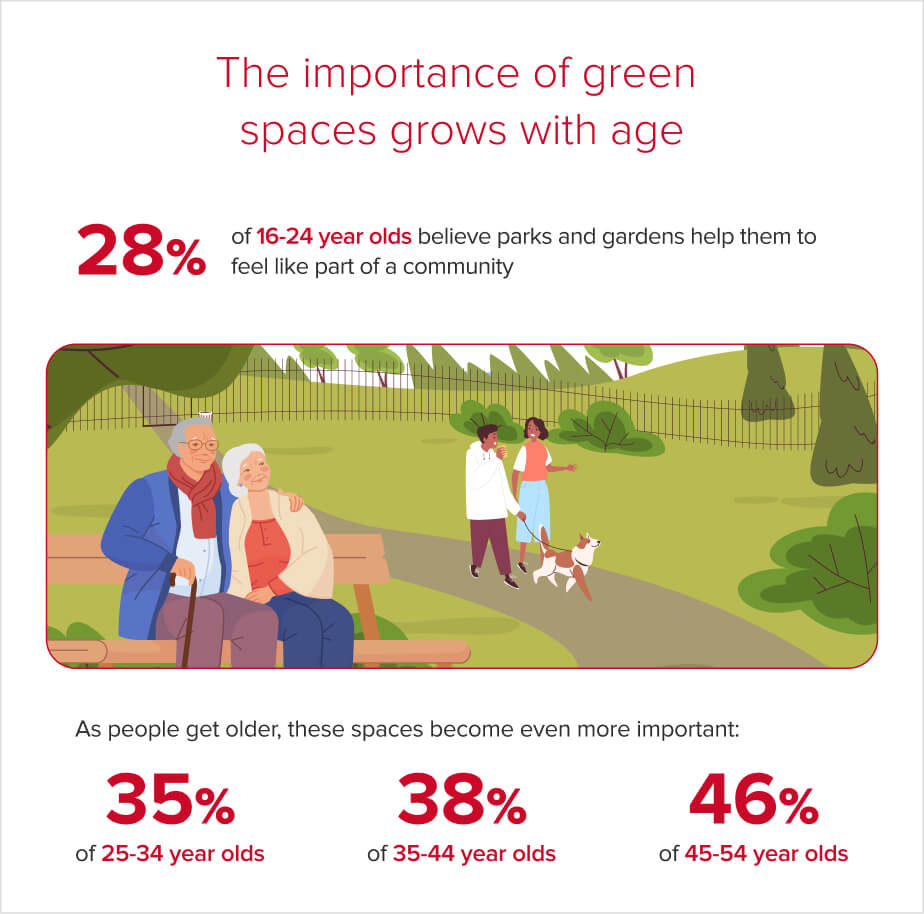
The importance placed upon green spaces increases with age, peaking with residents aged 45-54 (46%).
Other ways to foster connection include:
- Neighbourhood watch schemes (31%)
- Community events and celebrations (28%)
- Sharing or trading goods and services (25%)
- Joining in on local projects (18%)
Cultural gatherings (16%), children’s clubs (15%) and fitness activities (14%) are other ways that neighbourhoods are building their sense of community.
Four fun ways to foster connection in your community
There is no ‘one size fits all’ approach to creating a sense of community - but small, creative activities can spark friendships and make people feel genuinely valued.
-
Host a mini garden coffee morning: Even five minutes chatting over a cup of coffee or tea can spark new friendships.
-
Organise a themed swap: Swap seeds, books or children’s toys for a fun community boost.
-
Start a shared notice board: Post recommendations, local services or upcoming events to encourage interaction.
-
Set a neighbourhood challenge: Friendly competitions like a decorating contest or a walking challenge can be great conversation starters.
These playful activities can turn neighbours into friends and shared spaces into lively, welcoming areas.
Living well in a connected neighbourhood
The perfect neighbour is considerate, friendly and respectful – but a thriving community also relies on well-designed spaces, shared experiences and opportunities for interaction.
At Redrow, we design neighbourhoods with green spaces and thoughtful layouts to encourage these connections.
Initiatives such as our new build part exchange scheme and our assisted move scheme make moving into your new home simple and stress-free, so you can start enjoying life in a welcoming, connected community from day one.
Related Articles
-

Creating harmony at home - why house rules matter
Dec 12, 2024 -

Tips for hosting in your new home
Jun 18, 2024 -

10 ways we create thriving communities
Jul 22, 2025


