What is the new build premium? A data-led look at UK new-build house prices
What does ‘new build premium’ actually mean?
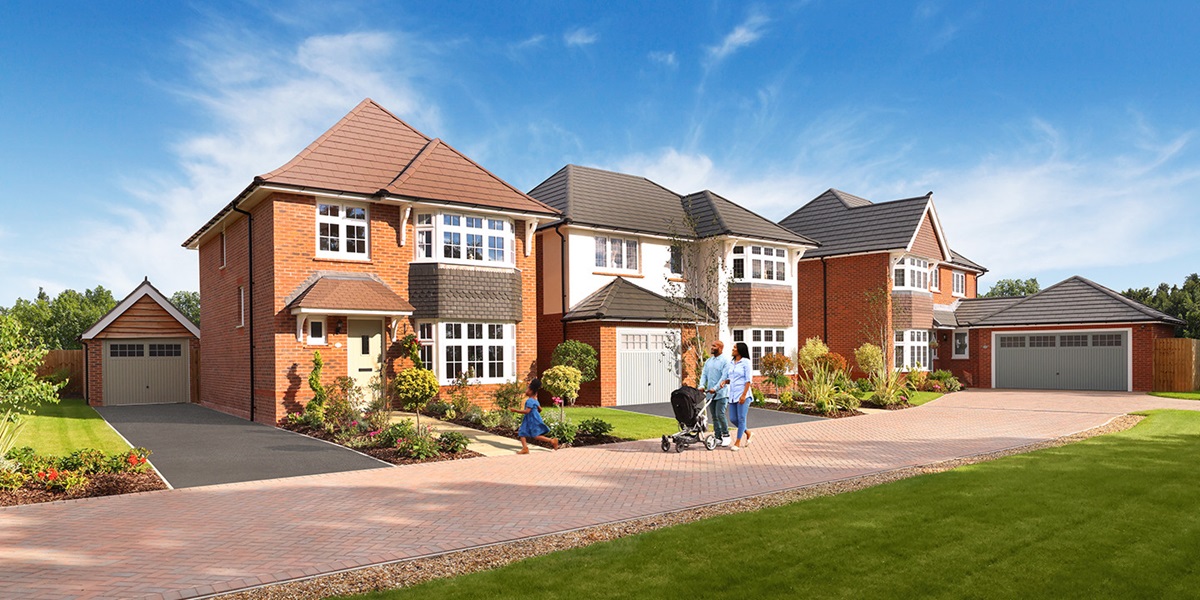
During your house search, you may come across the term ‘new build premium’. Simply put, this is the price difference between a brand-new home and an older property of similar size in the same area.
However, it’s worth noting that new build homes aren't always more expensive, and this premium doesn't apply in every market or location.
New-build homes must meet modern construction regulations and energy-efficiency standards and may require less maintenance than older homes. Many also include modern fittings, contemporary layouts and NHBC warranty and insurance protection.
Older properties can vary in condition and energy performance, depending on their age, upkeep and any improvements. However, they can also offer advantages and may appeal to buyers who prefer period character or established neighbourhoods.
Why new builds can cost more than older homes
There are several reasons why new-build homes might carry a higher price than older homes, including:
-
Higher build and material costs due to inflation. Some developers expect labour and material costs to increase by 21-40% in 2025-26, and these costs may be passed on to buyers1.
-
Enhanced consumer protections. The costs of the NHBC warranty and the insurance may be included in the final price of a new-build home.
-
Environmental, Social and Governance (ESG) pressures. Developers can face growing ESG compliance requirements, including evolving energy-efficiency and biodiversity standards.
Regional price differences in 2025-26
A key factor that may affect price differences in new-build homes is their location. While some markets, like London and the North West, can show steep premiums on new-build homes, this isn’t the case nationwide. Not all regions see inflated prices for new builds; some, like the South West and Yorkshire and the Humber, may even see lower prices for new-build homes compared to older properties.
|
Region |
Overall prices |
YoY Price Change |
Direction |
|
London |
£819,800 |
+£102,685 |
Rising strongly |
|
North West |
£372,622 |
+£61,404 |
Rising |
|
Yorkshire and The Humber |
£320,841 |
-£33,104 |
Falling |
|
South West |
£432,873 |
-£33,120 |
Falling2 |
How market conditions can influence new build pricing
New-build homes are not exempt from market conditions. The price of new builds can be shaped by complex factors, such as:
-
Variable buyer demand. Buyer demand is surging in some areas and falling in others3. Prices stay elevated in urban areas where demand remains high.
-
Challenges for developers. Planning delays and material cost spikes can affect new build pricing. Some developers may adjust their strategy in response to higher costs.
-
Energy efficiency standards. Meeting government energy-efficiency requirements can increase construction costs, which may be reflected in the sale price.
The real question: are new-build homes overpriced?
Whether new-build homes are overpriced can depend on various factors, including location, a buyer’s priorities, and what buyers consider a fair price.
Even in regions where new-build homes are more expensive upfront, it’s important to consider long-term costs, such as running and maintenance costs. It may also be worth considering whether a new build works for your needs and lifestyle, and how you define value.
Why do some buyers choose new builds?
Despite the potential premium, demand for new-build homes remains high due to:
-
Potential energy savings. Many new-build homes are built to EPC A or B standards, which can significantly impact running costs.
-
No onward chain. New build buyers move into a home with no previous owners.
-
Consumer protection. Many new-build homes come with a warranty.
-
Smart layouts and customisation. Many developments let buyers select finishes and fixtures, especially when buying a property off plan.
-
Government buyer support schemes. Government schemes, such as the Deposit Unlock and First Homes schemes, can help you get on the property ladder, subject to eligibility criteria.
FAQs
-
The price of a new build may reflect the full cost of meeting current building regulations, including the use of modern materials and the installation of energy-efficient systems. Challenges developers may face, such as rising labour costs, can also be factored into the price of new builds.
-
Like any home, the value of a new build can go up or down over time. Some new builds may decrease in value after purchase due to the ‘new build premium’ attached to the initial cost. However, they can still hold their value over the long term, especially in locations where property is in high demand. This depends on each individual property.
-
New builds must meet specific building regulations, including high levels of insulation, double or triple-glazing and modern boiler systems. They typically have an EPC rating of A or B, compared to D or E for the average older home, which could reduce your running costs over a typical ownership period.
-
Whether a new-build premium is the right long-term choice can depend on buyers’ individual circumstances. The ‘new build premium’ refers to the potential higher price of new builds compared to similar homes in the same area. New builds can have lower maintenance and running costs than older homes, but their value may not increase as quickly. It’s important to consider the whole picture when weighing whether a financial decision is suitable for your individual circumstances.
References:
- https://www.shawbrook.co.uk/property-finance/insights-hub/insights/uk-property-development-outlook-2025-developers-strategies/ ↩
- https://metro.co.uk/2025/11/18/map-reveals-average-price-new-build-homes-uk-region-24738004/ ↩
- https://www.fishergerman.co.uk/insights/news/the-current-landscape-of-new-homes-in-the-uk-trends-challenges-and-opportunities-in-2025 ↩
Related Articles
-

Part Exchange explained
Apr 14, 2026 -

Advantages of purchasing a new-build home
Apr 14, 2026


